Reviewing Gamer Gonna Game SVG for Embroidery
As a designer who spends more time staring at digitized stitch maps than actual fabric, I have learned that not every graphic translates well to thread. We live in an era where digital assets are abundant, but finding a Gamer Gonna Game, Gaming SVG Graphics file that actually respects the limitations and beauty of embroidery is a different challenge entirely. I recently pulled this specific design into my workflow to evaluate its potential for real-world applications, moving beyond the screen to see how it holds up under the needle.
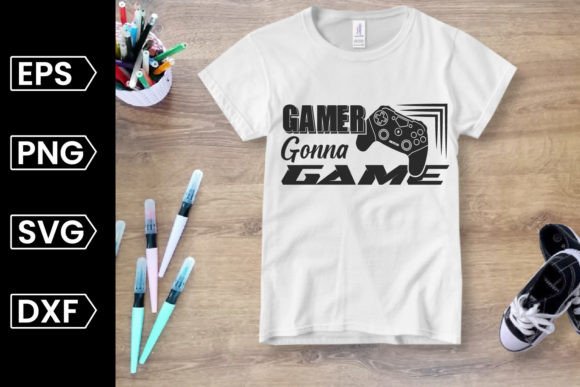
The first impression of this asset is promising. It carries a bold, playful energy that fits squarely within the gaming culture aesthetic. For those of us in the Crafts and Graphics space, we know that gaming-themed designs often suffer from being too pixelated or overly complex for small hoops. However, this particular layout feels balanced. The lines are clean, suggesting that the original vector paths were created with scalability in mind. This is crucial because a design that looks sharp on a monitor can turn into a muddy mess if the details are too fine for a satin stitch or fill stitch to capture accurately.
From Screen to Stitch: A Real-World Test
To truly test the viability of this design, I simulated a project for a local client who runs a small boutique specializing in personalized tech accessories and casual wear. The request was for a custom tote bag design that appealed to young adults who identify as gamers but also appreciate minimalist streetwear. I chose this Gamer Gonna Game, Gaming SVG Graphics file because of its strong silhouette.
In this scenario, the design was intended for a heavy canvas tote. Canvas is forgiving, but it requires careful handling of stitch density. If the digital file is too dense, the fabric puckers; if it is too light, the background shows through. Since this product comes as an SVG, EPS, and PNG, the responsibility falls on the embroiderer or digitizer to ensure the conversion to an embroidery file is handled correctly. If you are buying this as a pre-digitized machine embroidery design, you must check the stitch count. If you are digitizing it yourself from the SVG, you have the freedom to adjust the underlay and pull compensation.
The visual personality of the design works exceptionally well for custom apparel. I envision it sitting perfectly on the left chest of a hoodie or centered on the back of a sweatshirt. The bold nature of the graphics ensures that it remains legible even from a distance. For an Etsy seller or small shop product creator, this legibility is key. Customers scrolling through thumbnails need to instantly recognize the theme. A cluttered design gets lost; a strong, clear graphic like this one stops the scroll.
Navigating Fabric and Hoop Constraints
While the design is versatile, it is not without its constraints. Experienced makers know that context is everything. Using this graphic on a curved surface, such as a cap, requires careful placement. The text elements, if any are included in the specific variation you choose, must be arched correctly to avoid distortion during stitching. For flat items like pillow covers or aprons, the design shines. However, when applying it to stretchy fabrics like jersey knits for baby clothes, the stability of the stitch becomes paramount.
I would advise caution when using this on thin or dark fabrics without proper preparation. A stabilizer is non-negotiable here. For a personalized gift like a baby onesie, a cut-away stabilizer would provide the necessary support to prevent the stitches from pulling the fabric out of shape over time. Additionally, thread colors play a massive role in the final outcome. On dark navy or black garments, using a high-contrast thread color will make the design pop, but you must ensure that the stitch type—whether running stitch outlines or solid fills—does not create excessive bulk.
Another critical consideration is the hoop size. If you are working with a standard 4x4 inch hoop, you may need to scale the design down. This is where the vector nature of the SVG and EPS files is advantageous. You can resize without losing quality before digitizing. However, shrinking a design too much can cause tiny details to merge. Always run a test stitch on scrap fabric of the same weight and texture as your final project. This simple step saves hours of frustration and prevents ruined garments.
Commercial Viability and Brand Consistency
For commercial embroidery projects, consistency is king. If you are building a brand around gaming merchandise, this design fits seamlessly into a broader collection. It pairs well with other tech-inspired motifs, creating a cohesive look for your craft business. The professional appearance of the clean lines helps build customer trust. When a buyer receives a finished product that looks crisp and well-executed, they are more likely to leave a positive review and return for future purchases.
Moreover, the versatility of the file formats allows for multi-channel marketing. You can use the PNG for printable mockup creation on your website, showing customers how the design looks on various items without stitching a single thread. This saves time and resources during the product development phase. The SVG and EPS files allow for easy color modification, meaning you can offer customization options—such as team colors or school spirit themes—without needing to redraw the entire asset.
Practical Notes for the Modern Maker
Before you commit to producing inventory or accepting client orders using Gamer Gonna Game, Gaming SVG Graphics, take a moment to review the technical specifics. Since the product description mentions high-quality designs for business use, verify the licensing terms. Ensure that the license covers commercial use if you plan to sell physical items or digital derivatives. Ambiguity in licensing can lead to serious issues for digital product sellers and handmade shop owners.
- Test on Scrap: Always stitch out a sample on the exact fabric you intend to use. Check for puckering, thread breaks, and registration issues.
- Check Contrast: View your design in black and white to ensure the shapes are distinct and readable without relying on color differences.
- Inspect Details: Zoom in on the vector file. Are there any stray nodes or overlapping paths that could cause stitching errors? Clean up the file before digitizing.
- Consider the End User: If this is for a holiday gift or a frequently washed item like a kitchen towel, ensure the stitch density is durable enough to withstand laundering.
- Verify Formats: Confirm that the SVG and EPS files are compatible with your preferred digitizing software. Not all programs handle vector imports equally well.
In conclusion, this design offers a solid foundation for a variety of embroidery projects. It bridges the gap between digital aesthetics and tactile craftsmanship. Whether you are creating an embroidered patch for a jacket, decorating a sweatshirt for a streamer, or designing a unique baby embroidery piece for a gamer parent, this asset holds up under scrutiny. It requires thoughtful execution, proper stabilization, and attention to detail, but the results can be highly professional and engaging. For the modern maker looking to expand their portfolio with relevant, trendy designs, this is a worthy addition to your library of design assets.